Why URL Shorteners Are Still Useful in 2026
It's a reasonable question to ask. Messaging apps now show a preview of almost any link you paste in, most websites don't cut off long addresses anymore, and copying and pasting a link costs nothing regardless of how long it is. So why would anyone still need a tool whose entire original purpose was making links shorter?
The honest answer is that "shorter" was only ever part of the appeal and the rest of it matters more today than it ever has.
What a URL shortener is, in plain terms
A URL shortener is a tool that takes a long web address and replaces it with a short one that leads to the exact same place. When it was first created, this solved a single, obvious problem: some places you might want to share a link early text messages, in particular had strict limits on how many characters you could send, and a long web address could eat up most of that limit by itself.
Why the need for it hasn't gone away
Character limits on text messages loosened up years ago, and that original reason for shortening links has mostly disappeared. But a few other reasons have taken its place, and they turn out to be sturdier than the original one.
Not everything can be clicked. A rich preview only works inside an app that's built to show one. The moment a link moves offline printed on a flyer, displayed on a poster, read aloud during a podcast, or shown on a slide during a presentation none of that convenience exists anymore. Someone has to either scan it or type it out by hand, and a long, messy address makes both of those far more frustrating than they need to be.
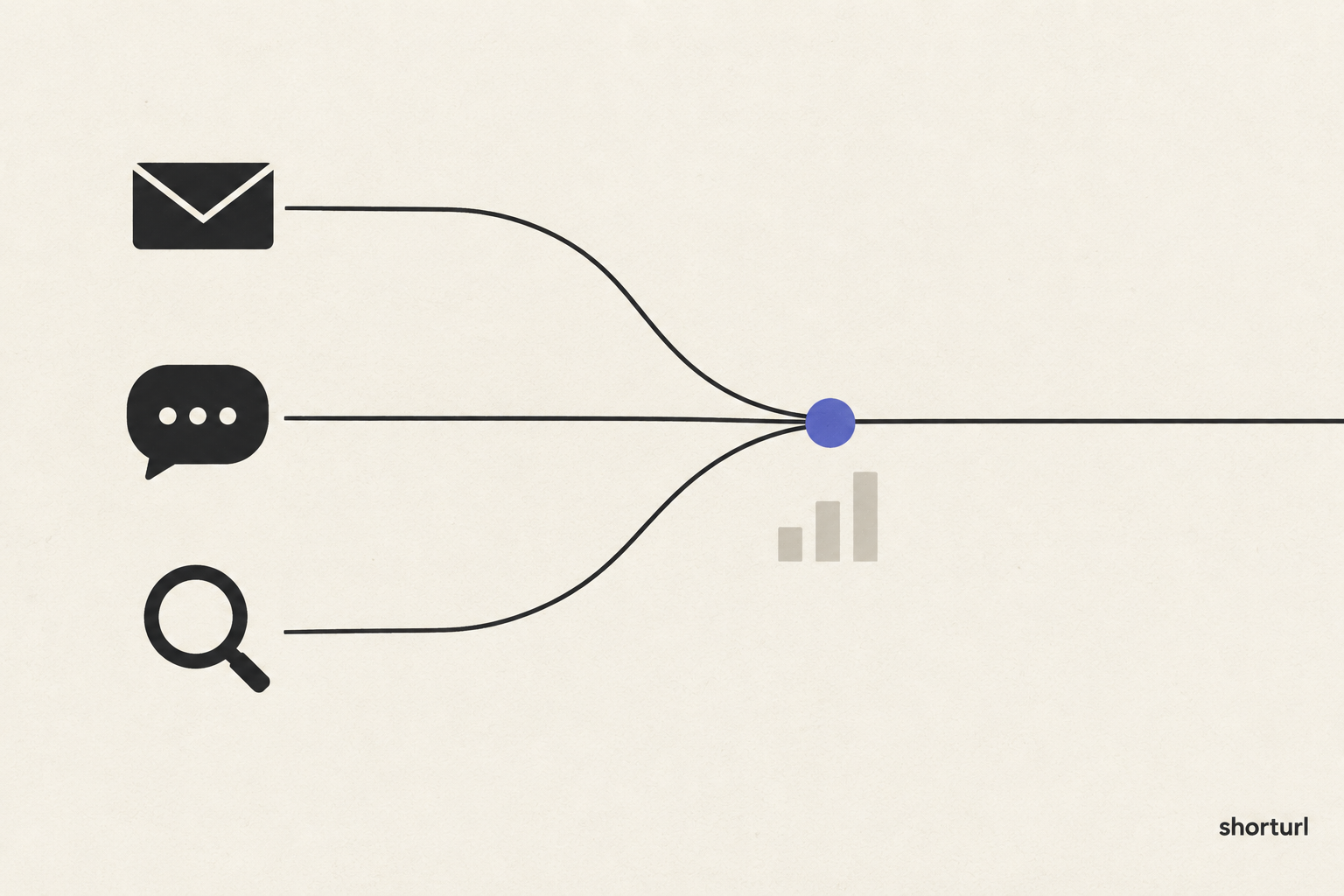
You often need to know what happened after someone clicked. A regular link can tell you nothing once someone clicks it the visit either happens or it doesn't, with no record of where it came from or whether it led anywhere useful. A shortened link, on the other hand, can quietly keep count: how many people clicked, roughly where they were, and what sent them there. For anyone spending time or money trying to get people to click a link in the first place, that information is often the entire point.
A recognizable address builds trust. People have grown far more cautious about unfamiliar links than they used to be, and that caution is generally a good thing. A link that reads yourbusiness.com/offer looks deliberate and trustworthy in a way that a long, cluttered address doesn't and that difference tends to matter most in exactly the situations where trust is already thin, like a cold email or an unfamiliar social media post.
A link can now do more than just point somewhere. Modern link tools let you change where a link leads after it's already been shared, set a link to quietly stop working after a certain date, or send different destinations to different links without ever needing to reprint anything. None of that was ever possible with a plain, unshortened address and it has nothing to do with saving characters.
The honest limitations
None of this means every link needs to be shortened. If you're sending someone a link privately, in a context where nobody but the two of you will ever see it, there's rarely any benefit to shortening it you gain no tracking insight worth having, and no one but you will ever notice how long the original address was.
It's also worth being aware that a shortened link hides its destination until someone clicks it, which is precisely why some people are wary of them you genuinely can't tell where a shortened link leads just by looking at it. This is a reasonable thing to be cautious about, and it's part of why using a recognizable, branded shortening service, rather than an unfamiliar and unbranded one, matters more than people often realize.
Where shorturl fits into this
shorturl is built around the reasons a shortened link is still worth using today, not the reason it was first invented. You get a link that's short and clean for printing or reading aloud, tracking that tells you exactly how it performed, and the option to put it under your own name through a custom domain so the people you share it with can see it's genuinely coming from you.
Give it a try
The next time you're about to hand someone a long, cluttered web address on a flyer, in an email, or in a caption try shortening it with shorturl first, and see how much cleaner and more trustworthy it looks.